

Summary: Portland landlords have more options than ever when it comes to how they rent their properties - but short-term, mid-term, and long-term rentals involve very different tradeoffs in income, effort, risk, and regulation. This guide breaks down each strategy honestly so you can make the right call for your specific situation in 2026.
⏱ 6-minute read
Short-Term vs. Mid-Term vs. Long-Term Rentals in Portland: Which Strategy Is Right for You?
One of the most common conversations we have with Portland property owners at Uptown Properties isn't about rent prices or tenant screening - it's about strategy. Specifically: how should I be renting my property?
The three main paths - short-term, mid-term, and long-term rentals - each have their advocates, and each can work well in the right circumstances. But they involve meaningfully different levels of income potential, hands-on management, regulatory exposure, and financial stability. What works beautifully for one landlord can be a poor fit for another.
Here's an honest, Portland-specific breakdown of all three.
Short-Term Rentals: High Upside, High Complexity
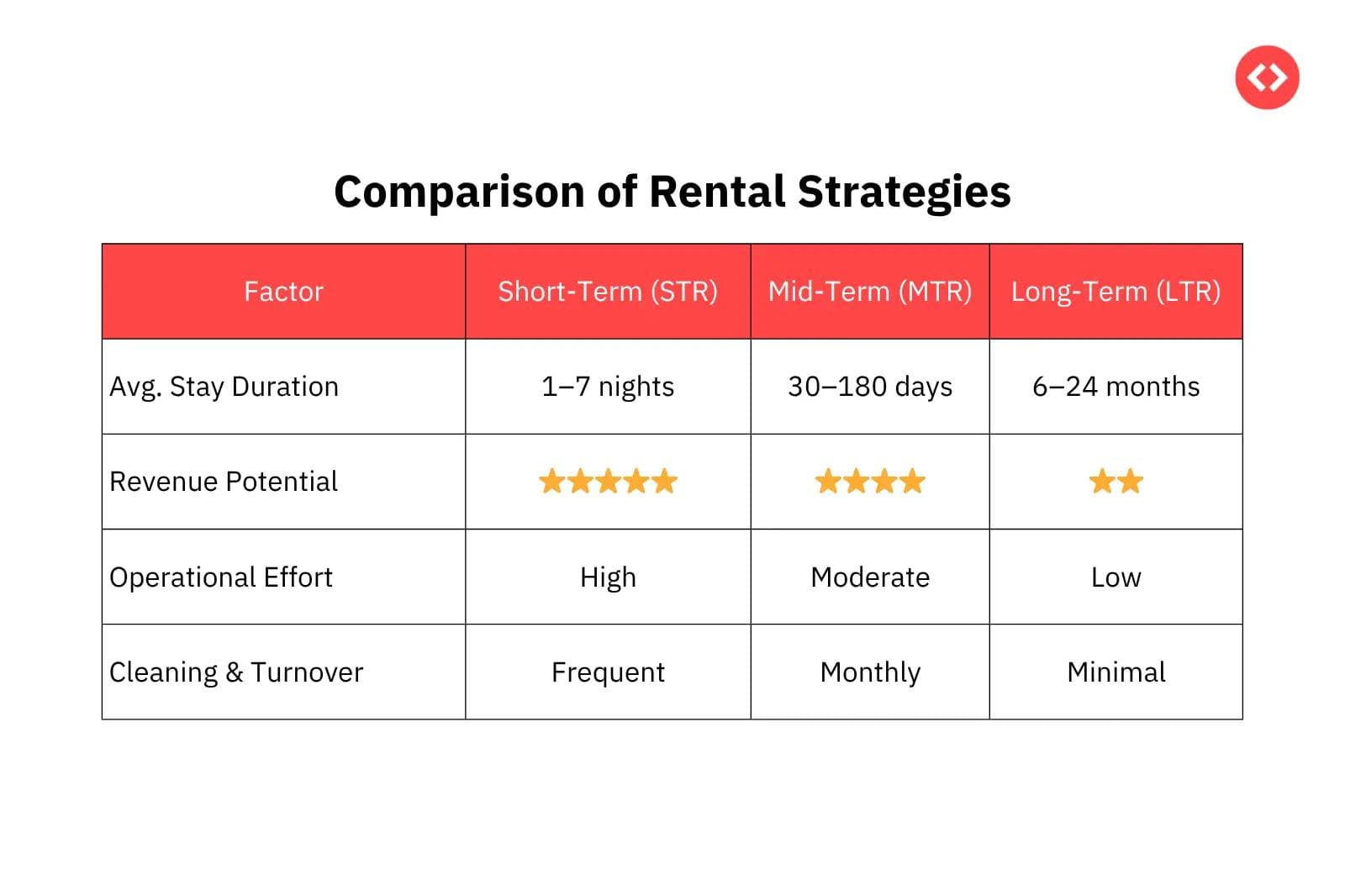
Short-term rentals - think Airbnb and VRBO, typically rented for fewer than 30 days at a time - get a lot of attention because of their income potential. A well-located, well-managed short-term rental can generate significantly more gross revenue than a comparable long-term lease, particularly in high-demand Portland neighborhoods or during peak seasons.
But in Portland, the short-term rental landscape comes with real constraints that every landlord needs to understand before going down this path.
The Regulatory Reality
Portland has some of the most detailed short-term rental regulations in Oregon, and they are actively enforced. According to the City of Portland's Bureau of Development Services, operating a short-term rental in a residential zone requires an Accessory Short-Term Rental (ASTR) permit - and the rules around eligibility are strict.
Critically, the city requires that the dwelling unit being rented short-term must be the host's primary residence. The resident must occupy the unit for at least 270 days per year, and renting an entire unit short-term without a long-term resident present is not permitted in residential zones. Hosts can rent no more than two bedrooms to five overnight guests under a Type A permit, with a separate Conditional Use Review required for three to five bedrooms. Permits must be renewed every two years and displayed prominently in the rental unit, with the permit number included in all listings.
The City has ramped up enforcement in recent years. Violations can result in fines of up to $27,513 per citation, and permits can be revoked for non-compliance. Permit fees increased 5–6% as of July 2025 under Portland Permitting & Development's adopted fee schedule.
The practical implication: if you're an investor who does not live in the property, operating a standard Airbnb-style short-term rental in a residential zone in Portland is not a viable strategy under current city code.
The Operational Reality
Beyond regulation, short-term rentals demand a level of active management that surprises many first-time hosts. Furnishing the unit, coordinating cleaning between every stay, managing guest communication, handling reviews, adjusting pricing seasonally, and responding to issues at all hours puts short-term rentals firmly in the category of running a hospitality business - not passive income. For owner-occupants with the time and temperament to manage it well, it can be lucrative. For landlords seeking a lower-touch investment, it rarely delivers on its promise.
The Bottom Line on STRs Best suited for: owner-occupants in high-demand Portland neighborhoods who have the time to manage it actively and are prepared to navigate the permit and compliance process.
Mid-Term Rentals: The Rising Middle Ground
Mid-term rentals - furnished units leased for 30 days to six months - have quietly become one of the most compelling strategies for Portland landlords, and the numbers back it up. Furnished Finder, one of the leading platforms for mid-term stays, received over 2 million inquiries in 2025, a year-over-year increase of more than 100%, driven by business travelers, healthcare workers, corporate relocations, academics, and remote workers on temporary assignments.
Portland is particularly well-positioned to capture this demand. The city's healthcare sector - anchored by OHSU, Legacy Health, and Providence - generates consistent demand from traveling nurses and medical professionals who need furnished housing for assignment lengths of 8 to 13 weeks. Portland's tech and professional services economy also drives corporate relocation and project-based housing needs year-round.
Why Mid-Term Works in Portland
Mid-term rentals thread the needle between the two extremes. They typically command higher monthly rents than long-term leases - because they're furnished and flexible - while requiring far less turnover than short-term rentals. A traveling nurse on a 13-week assignment represents one lease-up, one move-out, and a tenant who is highly motivated to treat the property well because it's their home for the duration of their assignment.
From a regulatory standpoint, mid-term rentals occupy favorable ground. Because stays are 30 days or longer, they fall outside Portland's ASTR short-term rental permit requirements. Oregon's landlord-tenant law still applies, but the permit and compliance burden is significantly lighter than short-term rentals.
The main investment is upfront: mid-term rentals need to be furnished to a professional standard. Reliable WiFi, a functional workspace, and quality bedding and kitchen equipment are baseline expectations for the traveling professional market. That's a real cost, but it's a one-time setup rather than an ongoing operational burden.
The Bottom Line on MTRs Best suited for: landlords with properties in or near Portland's medical corridors, university neighborhoods, or employment centers who are willing to furnish the unit and want higher-than-market rents with manageable turnover.
Long-Term Rentals: Stability, Simplicity, and Scale
Long-term rentals - traditional 12-month leases - remain the backbone of Portland's rental market and the foundation of most successful rental portfolios. They are not the most exciting strategy, but they are the most reliable - and in a market where operating costs are rising across the board, reliability has real financial value.
The Case for Long-Term
A well-placed long-term rental in Portland will typically maintain occupancy above 90% with predictable monthly income, minimal furnishing requirements, and significantly lower day-to-day management demands. Once a qualified tenant is placed, the operational workload drops substantially. There's no guest coordination, no seasonal pricing strategy, no weekly turnover. The business runs closer to true passive income than any other rental strategy.
Long-term rentals also operate within the most stable regulatory environment. Oregon's landlord-tenant law is well-established, and while Portland's tenant protections are significant - including just-cause eviction requirements and rent stabilization rules for older buildings - they are known quantities that experienced landlords and property managers navigate routinely.
For landlords managing multiple properties, long-term rentals scale more efficiently than either alternative. The operational overhead per unit stays manageable, and the income is predictable enough to support financing decisions, maintenance planning, and portfolio growth.
The Honest Tradeoffs
Long-term rentals cap your upside. You won't capture surge pricing or charge the premium that a furnished mid-term unit commands. In a rising cost environment — with insurance, property taxes, and maintenance all climbing - the margin on a long-term rental requires careful attention to pricing accuracy and cost management. Underpricing is a quiet margin killer, and overpricing extends vacancies that can cost more than a rent reduction would have.
Oregon's rent stabilization law also limits annual rent increases on buildings older than 15 years to a set percentage, which means long-term landlords need to price correctly at the outset and stay disciplined about renewal adjustments within legal limits.
The Bottom Line on LTRs Best suited for: most Portland landlords - particularly those managing multiple properties, prioritizing stable cash flow over maximum revenue, or who prefer a lower-touch investment without the regulatory complexity of short-term rentals.
How to Choose: The Questions That Actually Matter
With three viable strategies on the table, here's how we help Uptown Properties clients think through the decision:
Do you live in the property? If yes, and you're in a high-demand neighborhood, a short-term rental may be worth exploring - but go into it eyes open about the permit requirements and operational demands. If no, short-term is largely off the table in Portland's residential zones.
Is your property near a hospital, university, or major employer? If yes, mid-term is worth serious consideration. The demand is real and growing, and the economics can be compelling.
How much time do you want to spend managing your investment? Be honest with yourself. Short-term is a part-time job at minimum. Mid-term is manageable with the right systems. Long-term is the closest thing to set-it-and-forget-it - especially with professional management.
What does your financial picture look like? If stable, predictable cash flow matters more than maximizing gross income, long-term is almost always the right foundation. If you can absorb income variability and want to optimize revenue on a single unit, mid-term or (if eligible) short-term may pencil better.
We Can Help You Figure It Out
At Uptown Properties, we manage long-term and mid-term rentals across the Portland metro, and our brokerage team works with landlords at every stage - from first-time investors figuring out their strategy to experienced owners looking to optimize a growing portfolio.
Whether you're trying to decide how to rent a property you already own, or you're evaluating a purchase with a specific strategy in mind, we're glad to help you work through the numbers and the tradeoffs with local expertise behind it.
- Looking for a rental? We manage quality properties across Portland and can help you find the right fit.
- Ready to buy? Our brokerage team knows this market and can guide you from first conversation to closing.
- Own a rental property? We'll help you choose the right strategy, keep it leased, and protect your investment.
Schedule a 15 minute conversation and learn how we help Portland landlords protect their investments and their bottom line.