

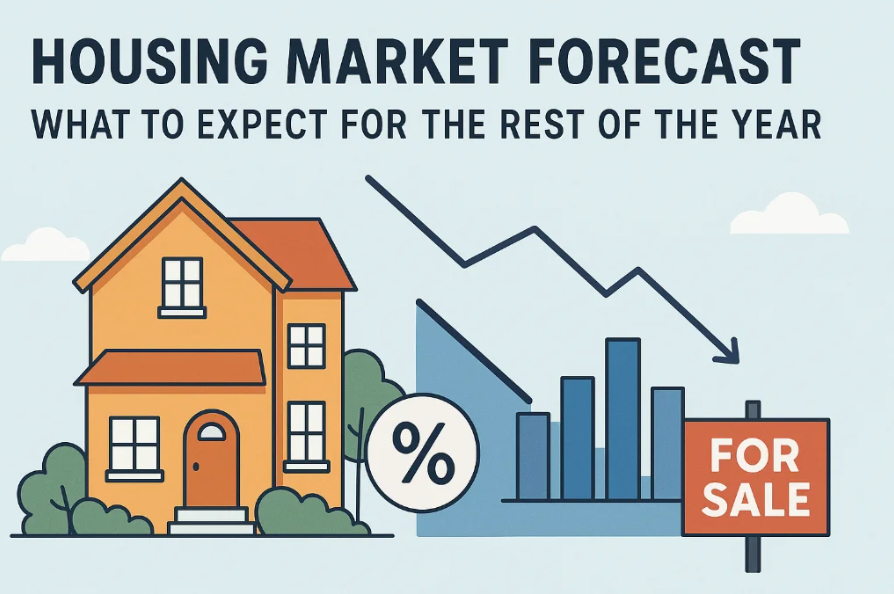
Summary: Portland's rental market has been softening for several years, but mid-2026 data points to something more specific than a freefall - a market in the process of recalibration, with meaningful variation by submarket and property type. This article breaks down what's actually driving the numbers, where the pockets of strength are, and what the second half of 2026 is likely to look like for Portland landlords.
⏱ 5-minute read
Is the Portland Rental Market Cooling or Stabilizing? What the Numbers Are Actually Telling Us
If you've been watching Portland's rental market and wondering whether the softness is leveling off or getting worse, you're asking the right question - and the honest answer is: it depends on where you look.
At Uptown Properties, we track this market closely because the difference between "cooling" and "stabilizing" has real implications for how our clients price their properties, time their leases, and plan for the year ahead. Here's our mid-2026 read on what the data is actually saying.
The Headline Numbers
Two data sources are tracking Portland's multifamily market most closely right now, and both tell a consistent story with slightly different scales.
According to CoStar, Portland's overall vacancy rate peaked at 7.9% in Q4 2024 and has since pulled back to approximately 7.5% as of Q2 2026 - a modest improvement that suggests the worst of the supply-driven oversaturation may be behind us. The Multifamily NW Spring 2026 survey, which covers nearly 29,300 units across the Portland-Vancouver metro, puts the vacancy figure at 6.25%, up from 5.85% a year earlier. The difference between these numbers reflects their respective sample sizes - CoStar's is broader metro-wide, while MFNW's covers survey respondents - but both point to the same directional trend: modest softening that is beginning to find a floor.
On rents, Yardi Matrix data shows asking rents in Portland dropped approximately 0.6% year-over-year as of early 2026, bringing the average to around $1,727. Relocity's April 2026 Portland Rental Trends Report puts the metro median at approximately $1,849 across all unit types and asset classes. The range across these sources reflects differences in what's being measured - asking vs. effective rents, multifamily-only vs. all residential - but the directional message is consistent: rents are flat to modestly negative, with the decline running roughly double the national average.
What's Driving It
Three forces have been working against Portland landlords simultaneously, and understanding them helps explain both the current numbers and the outlook.
Supply. Portland came out of the most aggressive construction cycle in its history. According to Northmarq's March 2026 Portland Multifamily Market report, 8,473 net units were delivered in 2024 alone - a generational high. That wave of new inventory gave renters more options, extended search timelines, and put downward pressure on rents across most submarkets. The good news: that pipeline has slowed dramatically. Only 2,200 units are scheduled for delivery in 2026 - the first time annual completions have fallen below 3,000 in over a decade. New groundbreakings have averaged fewer than 500 units per quarter for four of the last five quarters.
Employment. Portland's labor market has softened. The Portland-Vancouver-Hillsboro MSA unemployment rate stood at 4.9% as of December 2025, up from 4.1% the prior year, per the Portland Office Market Q1 2026 report from Kidder Mathews. Job growth has been concentrated in healthcare and government, while losses have been recorded across other sectors. When employment softens, renter mobility decreases - people stay put rather than move, which reduces leasing velocity even when headline vacancy numbers look manageable.
Affordability. Operating costs for landlords have surged. According to HFO Investment Real Estate's analysis of the MFNW Spring 2026 data, from 2021 to 2024, asking rents increased only 4.5% while operating expenses rose 59% - covering payroll, insurance, taxes, utilities, and administrative costs. That squeeze has put real pressure on net operating income across the portfolio, even for landlords who have maintained strong occupancy.
Where Stabilization Is Actually Happening
The market-wide averages obscure significant submarket divergence - and for landlords managing specific properties in specific neighborhoods, that divergence is the most actionable part of the data.
According to the MFNW Spring 2026 Report analyzed by HFO Investment Real Estate, Downtown and SW Portland carry the highest vacancy in the metro at 8.6% - a 28% year-over-year increase - driven heavily by new luxury deliveries still in lease-up. Inner and Central NE Portland, by contrast, have improved sharply and now represent some of the tightest conditions in the market.
Clackamas County has similarly outperformed, as have Columbia County, Clark County in Washington, and Yamhill County - submarkets characterized by supply constraints and affordability advantages relative to the urban core. Northmarq projects area vacancy to close 2026 at 4.8%, which would represent only the second annual vacancy decline since 2022 and put the rate back in line with long-term averages.
The practical takeaway: Downtown and luxury multifamily are where the softness is most concentrated. Suburban single-family and smaller multifamily properties in supply-constrained neighborhoods are performing considerably better.
What's Coming in the Second Half of 2026
CoStar projects positive annual rent growth will return by the end of 2026, stabilizing at 2-3% annually through 2030 - a meaningful reversal from the current negative trajectory. That forecast is largely supply-driven: as the pipeline of new deliveries shrinks and existing inventory absorbs, the balance of power shifts back toward landlords.
For property owners managing assets today, the implication is clear: this is not the time to assume conditions will deteriorate further or to make reactive pricing decisions driven by fear rather than data. The landlords who will be best positioned when the market tightens again are those who maintain occupancy, retain quality tenants, and keep their properties in strong condition through this recalibration period.
What This Means for You
If you're a Portland landlord wondering whether to adjust rents, offer concessions, or make improvements heading into the back half of the year, the data suggests a few things:
Pricing accurately for your specific submarket is more important than ever. Blanket market averages don't capture the variance between a well-located inner NE Portland property and a Downtown luxury unit. Retention is worth prioritizing - a single vacancy in today's market costs an estimated $3,000-$5,000 in lost rent and turnover costs, per property management data compiled in the Spring 2026 season. And the second half of the year is positioned to be stronger than the first, as supply pressure eases and seasonal leasing activity picks back up after the summer lull.
At Uptown Properties, we track submarket conditions across the Portland metro every day. If you want to talk through how current market conditions affect your specific property, our team is ready.
- Own a rental property? We manage Portland properties with full market analysis and owner transparency.
- Thinking about buying? Our brokerage team helps investors evaluate opportunities in today's market.
- Looking for a rental? We manage quality homes across Portland and the metro area.
Look forward to sharing more with you: Schedule a chat