

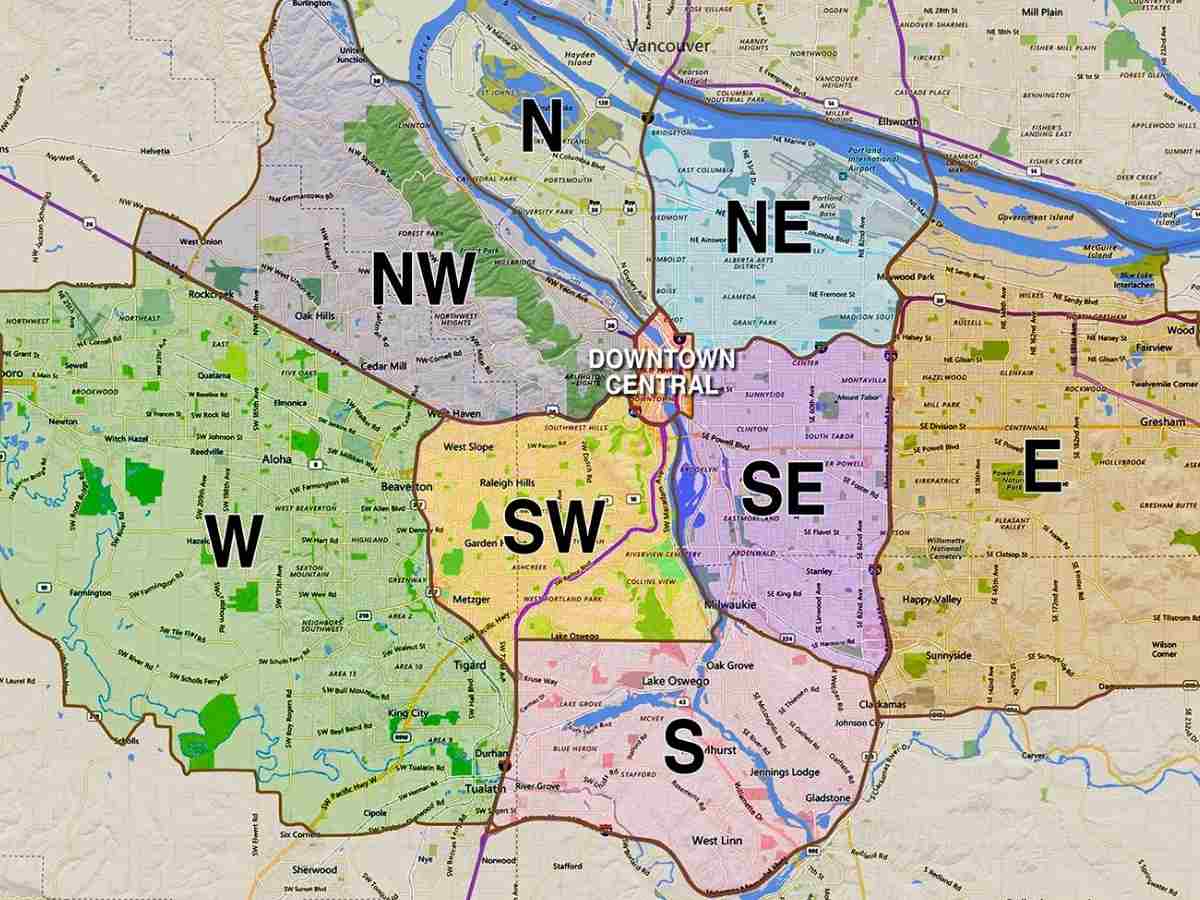
Summary: Portland's rental market in mid-2026 is defined more by submarket divergence than any single metro-wide trend. Inner NE Portland, Clackamas County, and several suburban submarkets are posting the tightest vacancy in the region, while Downtown and SW Portland carry the highest rates. This neighborhood-level breakdown helps landlords understand where their property sits in the market and what that means for pricing, marketing, and retention strategy.
⏱ 6-minute read
Which Portland Neighborhoods Have the Strongest Rental Demand Right Now?
One of the most common mistakes Portland landlords make when interpreting market data is applying metro-wide averages to their specific property. In a market as geographically and economically diverse as the Portland metro, that approach regularly leads to the wrong conclusions.
The most important story in Portland's mid-2026 rental market isn't the overall vacancy rate - it's the growing divergence between submarkets. Some neighborhoods are among the tightest rental markets in the entire Pacific Northwest. Others are struggling with elevated vacancy driven by a wave of new luxury construction that hasn't yet fully absorbed. Knowing where your property sits in that picture is the starting point for every strategic decision you'll make this year.
At Uptown Properties, we manage properties across the Portland metro and track submarket conditions continuously. Here's what the data is actually showing right now.
The Data Sources Behind This Analysis
The primary source for submarket-level Portland rental data is the Multifamily NW Spring 2026 Apartment Report, which surveys nearly 29,300 units across the Portland-Vancouver metro. HFO Investment Real Estate's June 2026 analysis of this report provides the most detailed submarket breakdown currently available. Additional neighborhood-level data comes from Rent.com's 2026 Portland rent trends report and Rentcafe's monthly Portland market updates.
The Tightest Markets in the Metro Right Now
Inner and Central NE Portland
Inner and Central NE Portland - encompassing neighborhoods like Irvington, Alameda, Beaumont-Wilshire, and the stretch of Alberta Arts District - have improved sharply through the current supply cycle and now represent some of the tightest rental conditions in the entire metro, per the MFNW Spring 2026 data analyzed by HFO. This is driven by a combination of factors: supply constraints in a built-out, walkable neighborhood fabric that doesn't easily accommodate large multifamily developments, consistent renter demand from young professionals and established families, and the neighborhood character that makes NE Portland one of the most searched areas by prospective renters.
Rent.com's 2026 data shows NE Portland posting modest positive rent growth, with the submarket trending in the right direction even as the broader metro softens. Landlords with well-maintained properties in this corridor are in a meaningfully stronger position than the metro average would suggest.
Clackamas County
Clackamas County has outperformed through the entire supply cycle and continues to post strong fundamentals in mid-2026. The combination of a limited construction pipeline, strong single-family rental demand from families priced out of ownership, and proximity to employers along the I-205 and Hwy 212 corridors has kept vacancy tight and pricing relatively stable. For landlords managing single-family homes and smaller multifamily properties in communities like Milwaukie, Lake Oswego, Happy Valley, and West Linn, the market is performing considerably better than headlines about Portland suggest.
SE Portland
Southeast Portland is posting essentially flat but positive trends - a 0.1% rent gain per HFO's analysis of the MFNW data - with absorption ranked second in the entire metro at 718 units. That absorption figure is meaningful: it reflects a submarket where qualified renters are actively leasing available units, not sitting on their hands. Neighborhoods like Sellwood, Woodstock, Division, and Richmond continue to attract renters who value walkability, access to independent restaurants and retail, and the character of Portland's established southeast neighborhoods.
Rent.com data shows SE Portland's Richmond neighborhood averaging $1,295 for a one-bedroom, with the Hawthorne District averaging $1,360 and Southeast Uplift around $1,427. These figures reflect real demand from renters who are specifically seeking the lifestyle that SE Portland offers.
Columbia County and Outer Suburban Markets
Columbia County has emerged as a quiet outperformer with 1.6% rent growth - the strongest among meaningful-sized submarkets in the metro - driven by zero new deliveries in the past year and no construction in the pipeline. At a median around $1,450 per month, it offers an affordability advantage that is attracting price-sensitive renters pushed out of tighter, pricier submarkets closer to the urban core. For landlords in St. Helens, Scappoose, and surrounding communities, this is one of the better operating environments in the region right now.
The Most Challenged Markets
Downtown Portland
Downtown and SW Portland carry the highest vacancy in the metro at 8.6% - a 28% year-over-year increase, per MFNW Spring 2026 data. This is the most directly supply-impacted submarket in the region, where new luxury deliveries from the past construction cycle are still in active lease-up. Rent.com's 2026 data notes that Belmont - one of the most expensive neighborhoods in Portland with average one-bedroom rents of $2,350 - serves a premium renter profile that has been more selective in today's market.
The good news for Downtown landlords: HFO's analysis notes that Downtown is actually posting 1.0% rent growth in stabilized assets - properties that completed their initial lease-up in prior cycles. The vacancy burden is concentrated in newly delivered buildings, not in the existing stock. Landlords with older, stabilized Downtown assets are in a different position than the 8.6% headline suggests.
Aloha, Hillsboro, Beaverton, Sherwood/Tualatin Corridor
The western Washington County submarket - Aloha, Hillsboro, Beaverton, and the Sherwood/Tualatin corridor - has seen the steepest rent declines relative to submarket size, per HFO's analysis, driven by aggressive new deliveries relative to the absorption capacity of these markets. The median rent in Hillsboro sits around $1,788 per month, per Relocity's April 2026 report, with rents trending flat to slightly down year-over-year.
These are still fundamentally strong rental markets with healthy employment bases - Intel, Nike, and the broader Silicon Forest corridor anchor demand in Washington County. But the pace of new construction has temporarily outpaced absorption, and landlords here need to be more attentive to pricing and presentation than they did a few years ago.
Vancouver, WA: The Standout Performer
No neighborhood discussion of the Portland metro is complete without addressing Vancouver, Washington - and the numbers there are notable.
Clark County's vacancy rate stands at just 3.6% - the lowest in the entire metro - despite absorbing the most new units of any submarket in the region and carrying 88% of the current construction pipeline. The driver is straightforward: Oregon workers attracted by Washington's lack of a state income tax are actively seeking rentals on the north side of the river. Per HFO's analysis, Vancouver has seen vacancy decline approximately 250 basis points since 2024, even while absorbing 25–40% of regional new deliveries each year.
For Portland landlords considering their next acquisition, Vancouver's fundamentals are among the most compelling in the Pacific Northwest multifamily market.
What This Means Neighborhood by Neighborhood
Rent.com's 2026 Portland data provides useful street-level context on pricing by neighborhood:
Most affordable Portland neighborhoods for one-bedroom apartments: Powellhurst-Gilbert ($1,080), Hosford-Abernethy ($1,195), Multnomah Village ($1,210), Southwest Portland ($1,245), Madison South ($1,260). These areas offer landlords a renter pool that is often more stable and longer-tenured than higher-priced neighborhoods - affordability-driven demand tends to be less sensitive to seasonal fluctuation.
Most in-demand Portland neighborhoods: Hawthorne District ($1,360), Richmond ($1,295), Belmont ($2,350), North Tabor ($1,349), Southeast Uplift ($1,427). These command premiums driven by walkability, transit access, and neighborhood character - and they're where presentation and condition make the biggest difference in leasing timelines.
The Takeaway for Portland Landlords
The Portland rental market in mid-2026 is not a single story. It is Inner NE Portland performing well and Downtown struggling with lease-up inventory. It is Clackamas County holding tight while the Beaverton corridor absorbs new supply. It is Vancouver outperforming the entire metro while some close-in neighborhoods soften.
Where your property sits in that picture determines your strategy. A landlord in Irvington and a landlord in a new Southwest Portland high-rise are operating in fundamentally different markets, and the advice that applies to one doesn't necessarily apply to the other.
At Uptown Properties, we track conditions at the neighborhood level - not just the metro average - and we use that data to price, market, and manage our clients' properties appropriately for where they actually are.
- Own a rental property? We manage Portland properties with neighborhood-level market knowledge.
- Thinking about buying? Our brokerage team helps investors identify the right submarkets for their strategy.
- Looking for a rental? We manage quality homes across Portland and the metro area.
Look forward to sharing more with you: Schedule a chat