

The 2026 Strategy Shift: Why Now is the Window for Portland Real Estate
Reading Time: 5 Minutes
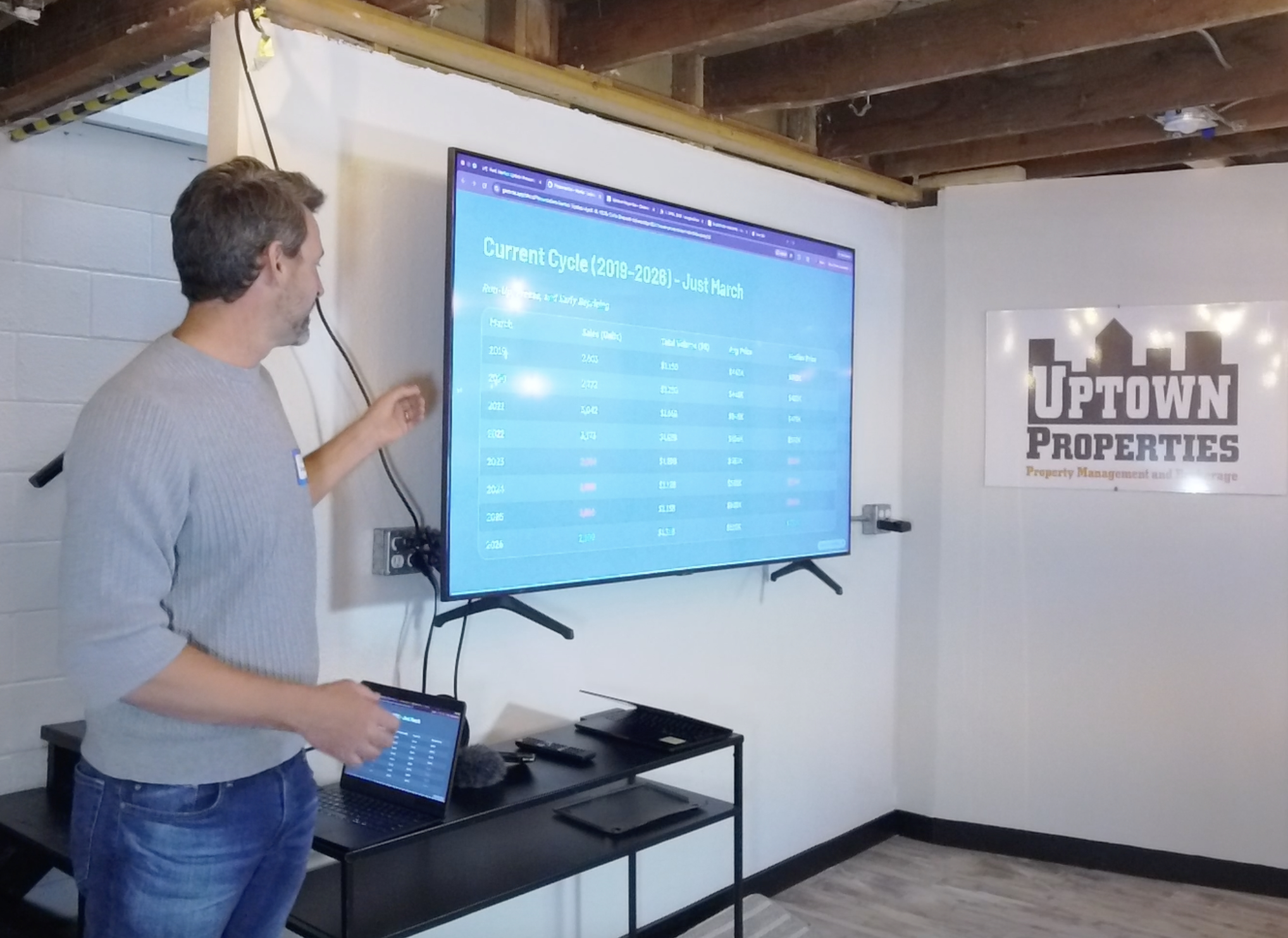
Summary: At our latest Westside Investors Network (WIN) event, co-founder Chris Shepard delivered a high-stakes market update that challenged the "wait-and-see" mentality. While the 2026 market feels heavy due to interest rates and "soft" fundamentals, the data suggests we are entering a rare buyer’s window. By comparing today’s cycle to 2008 and exploring the "hidden" impact of inflation, Chris provided a roadmap for building long-term wealth in a slow-recovery market.
Timing, Risk, and the 2026 Window
Is now a bad time to buy, or the best time in a decade? That was the core question of Chris Shepard's 15-minute tactical briefing. While many investors are sidelined by 6.5% interest rates, Chris argues that those who understand Market Scenarios and Creative Math are currently finding the best deals since the pandemic began.
1. 2026 vs. 2008: The Sane Comparison
Chris addressed the elephant in the room: many are drawing parallels to the 2008 crash. However, the 2026 cycle has key differences. Unlike 2008’s credit collapse, today’s market is defined by "normalized" rates (6%–8%) and a lack of new inventory.
The Takeaway: We aren't looking at a bubble pop; we are looking at a stabilization. In Portland, home values are remaining flat or showing modest 1%–2% growth—a far cry from the freefall of 2008.
2. The Hidden Cost of Inflation
While high rates steal the headlines, Chris highlighted how inflation quietly erodes the "real" cost of your debt.
If inflation is at 3.3% and your mortgage is at 6.5%, the "real" interest rate is actually closer to 3.2%.
Over time, as rents and property values eventually adjust for inflation, the fixed debt you took on today becomes significantly cheaper to pay back.
3. Why This is a "Buyer’s Market" (For Now)
Portland currently ranks as one of the most balanced—and in some cases, renter/buyer-friendly—markets in over a decade.
Leverage is Back: With days-on-market stretching to 80+ days and nearly 40% of sellers offering concessions, buyers can actually negotiate repairs, rate buy-downs, and price drops.
The "Wait-and-See" Tax: If you wait for rates to drop to 5%, competition will skyrocket, and the ability to negotiate will vanish.
4. The 3 Market Scenarios
Chris broke down where we could head next:
Scenario A (The Slow Grind): Rates stay in the 6% range, and the market stays flat for 24 months. (Ideal for accumulating properties with creative financing).
Scenario B (The Pivot): The Fed drops rates significantly, triggering a "Refi Wave" and immediate price appreciation. (Great for equity, bad for new acquisitions).
Scenario C (The Stagflation): High costs and slow growth persist. (Success here depends entirely on "Best Use" analysis and operational efficiency).
The Bottom Line
Success in the 2026–2029 cycle requires a shift in mindset. As Chris puts it, "Where focus goes, energy flows." If you focus on the "doom," you’ll miss the window. If you focus on the math and creative financing—like the SDIRA strategies we discussed with Kaaren Hall—you can build a portfolio while everyone else is waiting for the 3% rates that aren't coming back.